
 We respect your privacy. Please refer to our full
Chemicals Investment Banking: How to Power Up Your Peptides
If you like both drugs and money, chemicals investment banking could be the ideal group for you.
It’s not a hot area like AI/data centers, renewables, or defense tech, but it supports many of these.
Just as a simple example, the batteries used in electric vehicles (EVs) require a range of chemicals, and the paint on every single car in existence also uses chemicals.
So, if you’re interested in the infrastructure that enables the latest fad, without being directly in that fad, you might want to covalently bond yourself to the chemistry investment banking group:
- All the Elements of Chemicals Investment Banking
- How to Cook Some Crystal Meth as an Analyst or Associate
- Chain Reactions: Trends and Drivers in Chemicals
- The Periodic Table: Chemicals Investment Banking by Vertical
- Chemicals Accounting, Valuation, and Financial Modeling
- Example Valuations, Pitch Books, Fairness Opinions, and Investor Presentations
- Reagents and Catalysts: The Top Chemicals Investment Banking Groups and Firms
- Exit Opportunities
- How to Learn More About the Peptides Chemicals Sector
- Should You Synthesize Your Way into Chemicals IB?
All the Elements of Chemicals Investment Banking
Chemicals Investment Banking Definition: In chemicals IB, bankers advise commodity, specialty, and agricultural chemicals companies, plus industrial gas firms, on debt, equity, and M&A deals.
Most sources place Chemicals within the broader Materials sector:
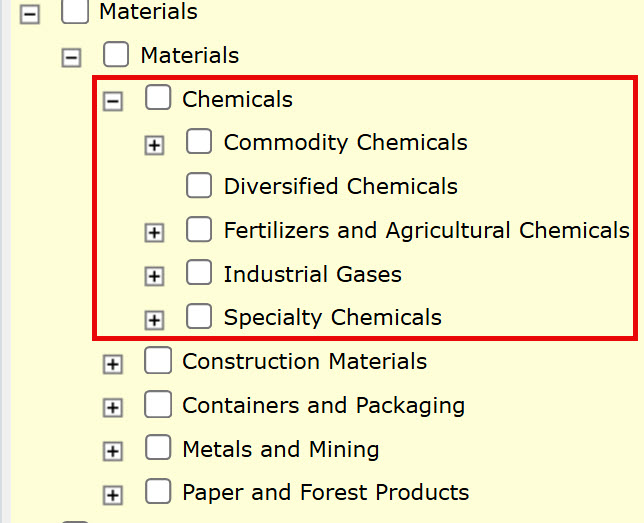
The Materials sector consists mostly of companies that produce non-energy commodities, such as lumber, cement, paper, packaging, and metals.
These firms all tend to be capital-intensive, with high barriers to entry, and they are hypersensitive to economic growth and commodity prices.
They are highly cyclical, with high fixed costs and long startup times, so near-term revenue depends mostly on underlying product prices.
Chemicals firms share many of these characteristics, but the specifics differ by vertical.
The main difference vs. broader “Materials” firms is that most chemicals start as oil & gas and derive from there (e.g., oil is used for ethylene, propylene, and benzene).
Some chemicals also start as mined commodities, such as the potash and phosphate used in fertilizers.
Because of this overlap with other industries, banks classify their Chemicals groups in wildly different ways.
How to Cook Some Crystal Meth as an Analyst or Associate
To get a sense of what you’ll be cooking up as a junior banker, you can look at M&A and equity/debt deal activity from a company like BASF, the world’s largest chemical producer by annual revenue:
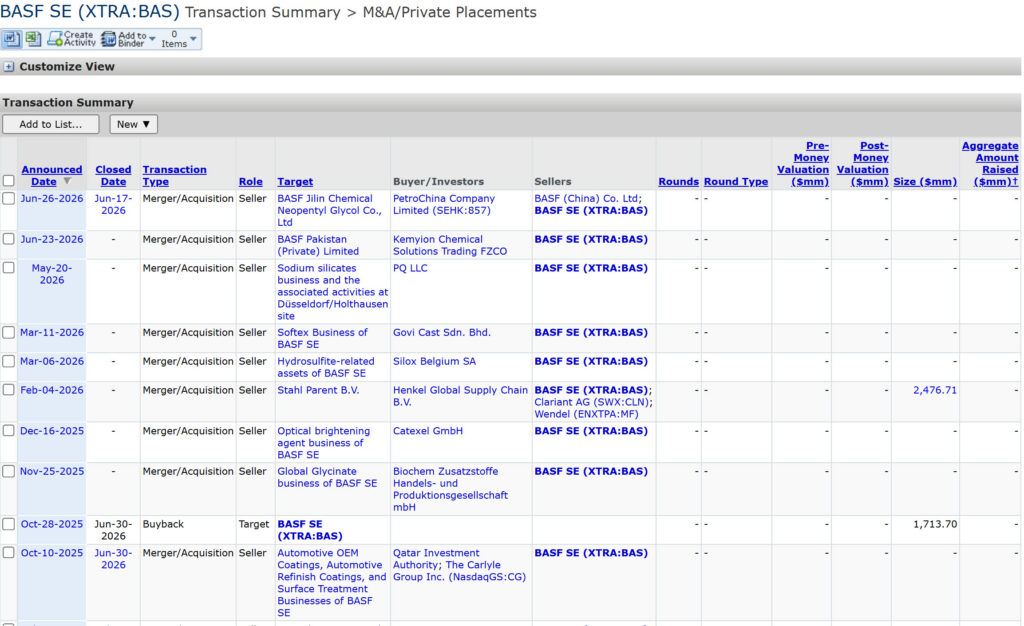
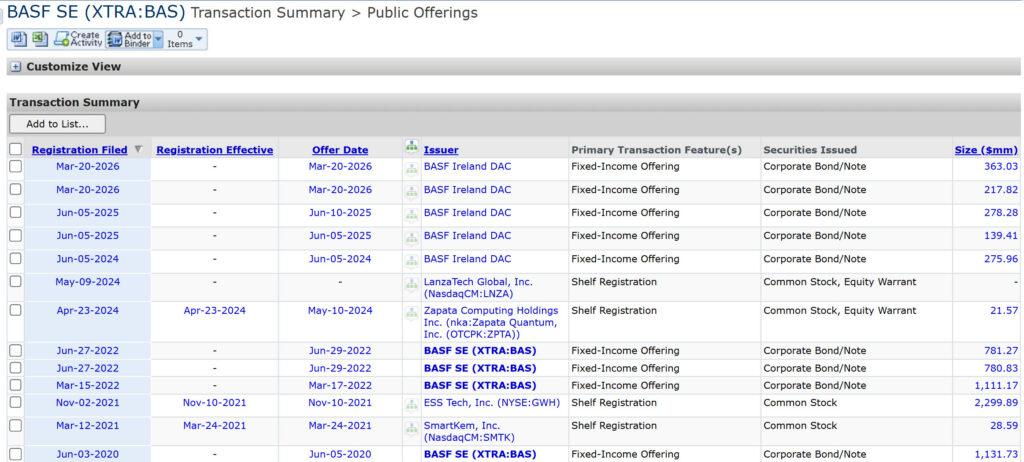
Expect smaller, tuck-in M&A deals along with a lot of debt deals.
Chemicals is a mature sector with profitable and cash-flow-positive companies and a clear “value” orientation, so it is ideal for fixed income.
M&A mega-deals worth $10+ billion happen occasionally, but they’re uncommon even for a company at BASF’s scale.
Equity offerings are less common outside of specific “growth areas,” such as biofuels and lithium/battery-chemicals companies.
Chain Reactions: Trends and Drivers in Chemicals
Many of these trends and drivers overlap with those in adjacent sectors, but let’s go through the list anyway:
- GDP Growth and Trade – When the overall economy grows more quickly, there’s more demand for all the products that use chemicals, such as food, cars, homes, electronics, planes, and yes, even AI chips.
- Input Costs – Companies always have a mix of freight/transportation costs, energy/raw material costs, labor costs, and royalties/taxes, but the split depends on the vertical. Chemicals firms are “downstream” rather than upstream (i.e., they produce based on materials provided by others), so they are highly sensitive to raw material and energy costs.
- CapEx and Capital Intensity – Since chemical plants are expensive to build, operate, and maintain, capital expenditures (CapEx) are crucial; many bank presentations use them in key metrics and examine Maintenance vs. Growth CapEx separately.
- Capacity, Utilization, and Spreads – Similar to metal producers, chemical production firms always have a certain amount of “capacity” in their plants, with a limited ability to change this in the short term. So, revenue largely depends on how much capacity is utilized, supply and demand dynamics, and the spreads between input prices and finished-product prices. Also, some chemicals are priced globally, while others are priced on a regional basis.
- Interest Rates and Credit – Since chemicals firms require constant CapEx and issue debt frequently, they are highly sensitive to interest rates, credit availability, and monetary policies that affect these.
- End-Market Growth – Since most chemicals firms produce intermediate products that support other industries, you must look at the end markets to estimate future demand. For example, it’s positive if home and auto sales are expected to increase over the next few years.
The Periodic Table: Chemicals Investment Banking by Vertical
I’ll describe below the main verticals within chemicals.
The drivers and projection methods are quite similar for each one (Volume Produced * Average Price = Revenue), so I am purposely not going into much detail on the technical differences.
Commodity Chemicals
Representative Public Companies: Rongsheng Petrochemical (China), Dow, LyondellBasell, LG Chem (South Korea), Hengli Petrochemical (China), Saudi Basic Industries, Jiangsu Eastern Shenghong (China), Asahi Kasei (Japan), Hengyi Petrochemical (China), Toray Industries (Japan), and PTT Global Chemical (Thailand).
Nearly this entire list consists of Asian companies because they tend to be very good at cheap and efficient manufacturing, which is what commodity chemicals require.
These chemicals are mostly the intermediate steps of the final products in other industries, and they are mass-produced in huge plants that run ~24 hours per day.
These plants use a “cracking” process to break down large hydrocarbons into smaller ones, such as ethylene and propylene (the simplest and most common petrochemicals).
Competition is intense, so these firms have little pricing power and are highly cyclical.
Pricing in this vertical is global because these firms produce… global commodities.
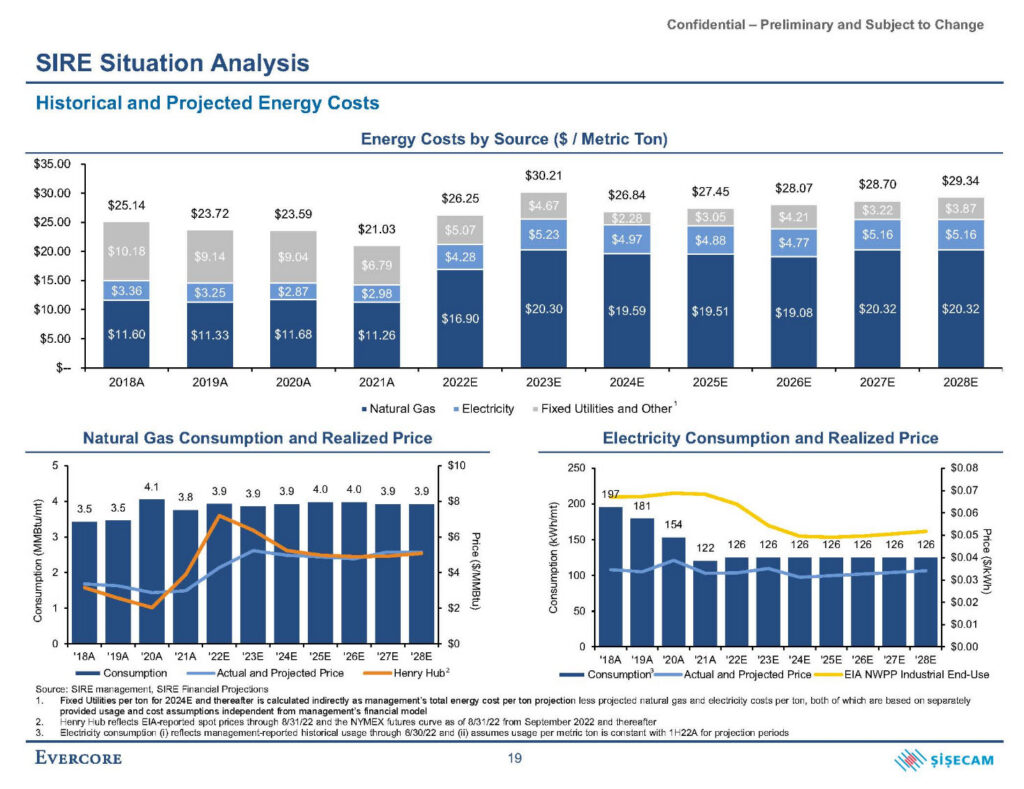
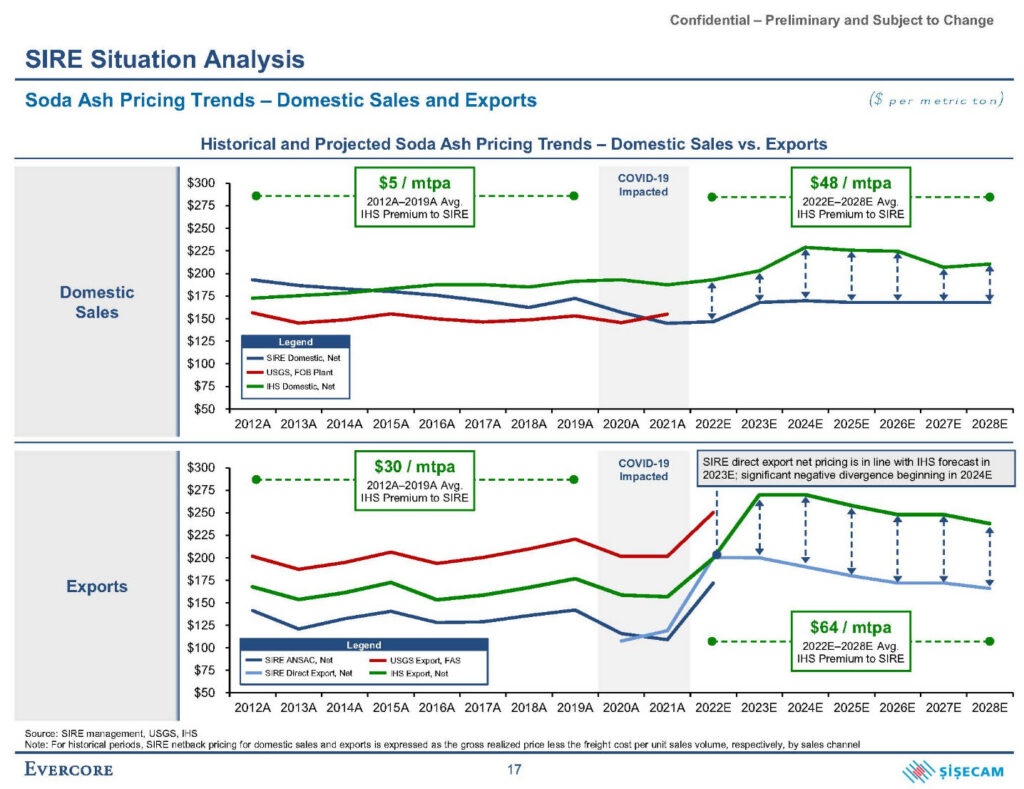
As shown in Evercore’s presentation to Sisecam, you focus heavily on the cost components, including energy and electricity prices, and the commodity price cycle:
Fertilizers and Agricultural Chemicals
Representative Public Companies: Nutrien (Canada), Corteva, Yara International (Norway), The Mosaic Company, CF Industries, ICL Group (Israel), Israel Corporation, PhosAgro (Russia), Yunnan Yuntianhua (China), and UPL (India).
Some notable names are missing from this list: Cargill is not public, and Archer-Daniels-Midland is not classified as a “chemicals company,” even though it’s huge in the agricultural space.
This list is more geographically diverse, which makes sense because food consumption and production are more regional.
These companies produce everything from seeds and fertilizers to pesticides, herbicides, fungicides, and genetically modified seeds.
Drivers include regional food consumption, weather, pests/diseases, energy prices, agricultural technology, and government regulations and tariffs (think about the historical push to encourage biofuel production in the U.S.).
Public opinion and backlash about acceptable practices also factor into pricing and supply/demand (see: the Monsanto controversies).
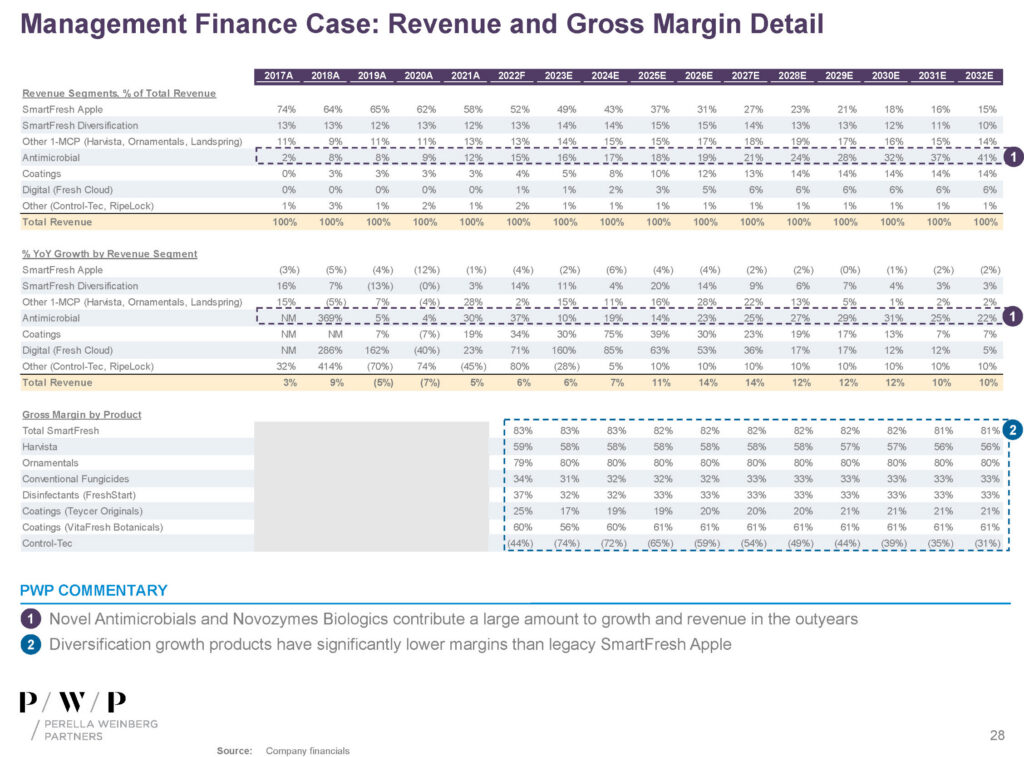
As seen in the PWP presentation to AgroFresh, a major focus in this vertical is forecasting the pricing and margins by product line:
Industrial Gases
Representative Public Companies: Linde (U.K.), L’Air Liquide (France), Air Products and Chemicals, Nippon Sanso (Japan), Air Water (Japan), Hangzhou Oxygen Plant Group (China), and SOL (Italy).
The industrial gas vertical is the smallest one within chemicals, but it is interesting for a few reasons.
These companies produce everything from helium for party balloons to hydrogen for fuel transmission.
The most common other products include nitrogen, oxygen, and argon, and they are used to create or prevent chemical reactions and make other materials.
Most industrial gases are used in chemical or metal production, with the remainder going to electronics.
Helium has attracted a lot of attention lately because of its role in GPU production (the chips used in AI data centers), and how “geopolitical events” may have created a huge shortage.
Most industrial gases are inefficient to ship over long distances, so they tend to be priced regionally and are delivered in small cylinders or direct pipelines (bulk liquid tankers may be used in cases where longer distances make sense).
Partially because of these regional/market differences, margins are often higher, with some companies in the list above at 20 – 30%+ EBITDA margins.
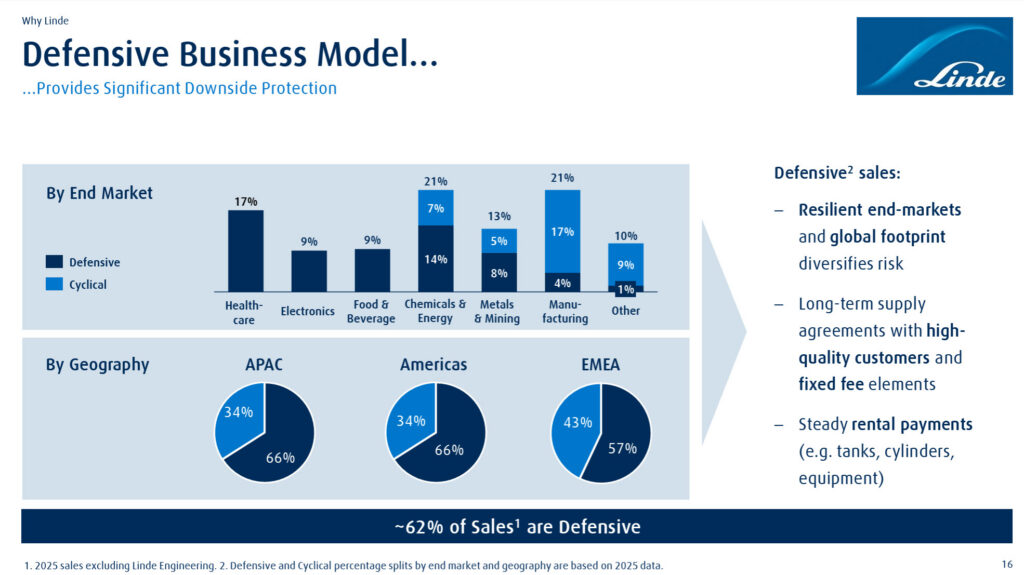
In this vertical, you focus on the end markets and geographic reach to demonstrate how companies are diversified and can serve local markets efficiently:
Specialty Chemicals
Representative Public Companies: Wanhua Chemical Group (China), Umicore (Belgium), The Sherwin-Williams Company, Ecolab, Johnson Matthey (U.K.), PPG Industries, Evonik Industries (Germany), Shin-Etsu Chemical (Japan), Covestro (Germany), Sika (Switzerland), Nippon Paint (Japan), and Akzo Nobel (Netherlands).
Many of the firms in the list above produce paint for houses and vehicles, so demand depends heavily on the auto and home-sale markets.
But outside of those, this vertical is interesting because it’s the least “commodity-like”:
- These firms tend to produce custom batches of chemicals tailored to specific customer needs since their markets are more niche.
- They tend to have more pricing power and are less cyclical. Regional pricing is common because of the smaller markets and custom volumes.
- These companies often operate at higher margins due to these factors, especially in high-tech or advanced areas. For example, the carbon fibers used in aircraft and vehicle parts were considered “advanced materials” for a long time, which explains the higher margins of firms such as Hexcel and Teijin.
Specialty chemicals firms rely heavily on the commodity chemicals firms because many of their outputs act as inputs for these companies.
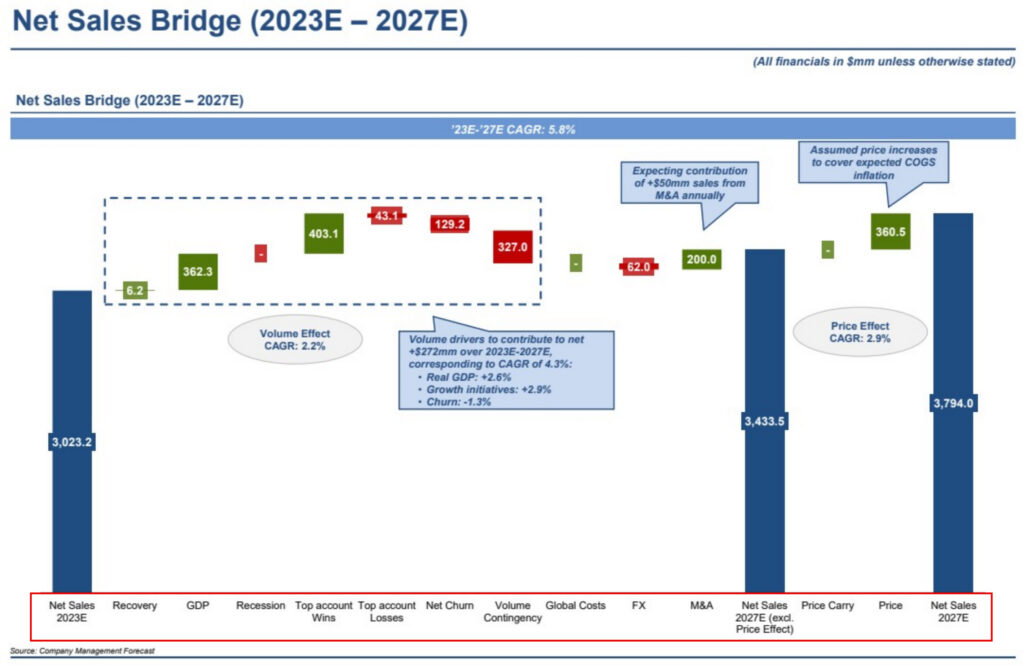
Analysis in this sector often focuses on the “why” behind the forecasts rather than the “what,” as in this Evercore presentation to Diversey Holdings:
Diversified Chemicals
Representative Public Companies: BASF (Germany), Mitsubishi Chemical (Japan), Sasol (South Africa), Sumitomo Chemical (Japan), Resonac Holdings (Japan), Ningxia Baofeng Energy (China), LANXESS Aktiengesellschaft (Germany), Huntsman Corporation, The Chemours Company, and Solvay (Belgium).
These companies do a bit of everything, combining the traits of all the verticals above.
Asian companies still dominate this list because commodity chemicals are central to everything, so production efficiency and lower costs are huge advantages.
To analyze these companies, you must forecast the revenue, expenses, and cash flows for each division separately, focusing on the end markets and regional vs. global pricing differences.
Chemicals Accounting, Valuation, and Financial Modeling
Accounting, valuation, and financial modeling are quite standard in the Chemicals sector, and you’ll see traditional valuation multiples, such as TEV / EBITDA, and the Unlevered DCF used in nearly all bank presentations and Fairness Opinions.
But there are a few nuances to note:
1) Sum of the Parts and “Split” DCFs
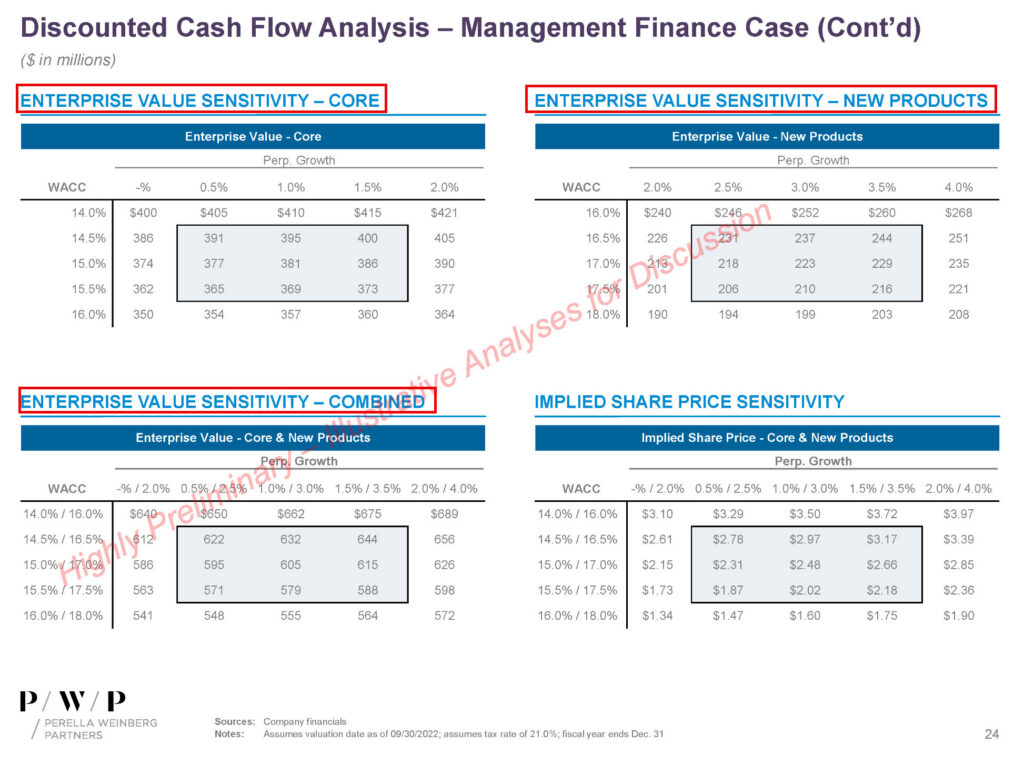
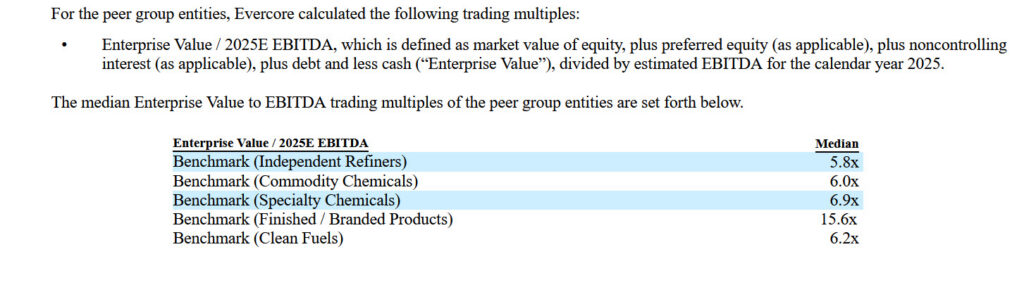
For companies like those in the “Diversified” vertical above, it’s common to see Sum-of-the-Parts valuation approaches and other DCF variations that split up business in different ways, such as Existing vs. New Products.
Here’s one example from the PWP presentation to AgroFresh:
And here’s the partial output from an Evercore SOTP example presented to Calumet Specialty Products:
2) More Complex Capital Structures
Chemicals firms tend to use significant debt, so you also see more complexity in other parts of the capital structure.
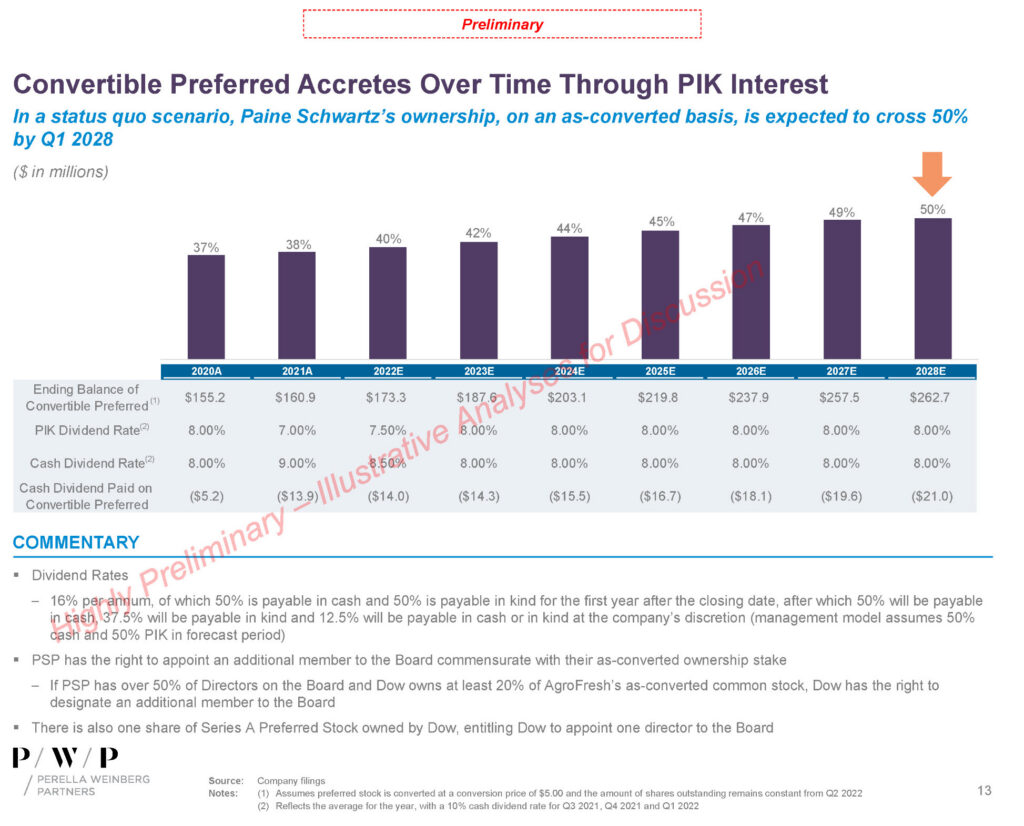
For example, convertible preferred stock can come up, and unfunded pensions are common for legacy companies.
Here’s an example of the convertible preferred treatment in a similar PWP presentation to AgroFresh:
3) Other Valuation Methodologies
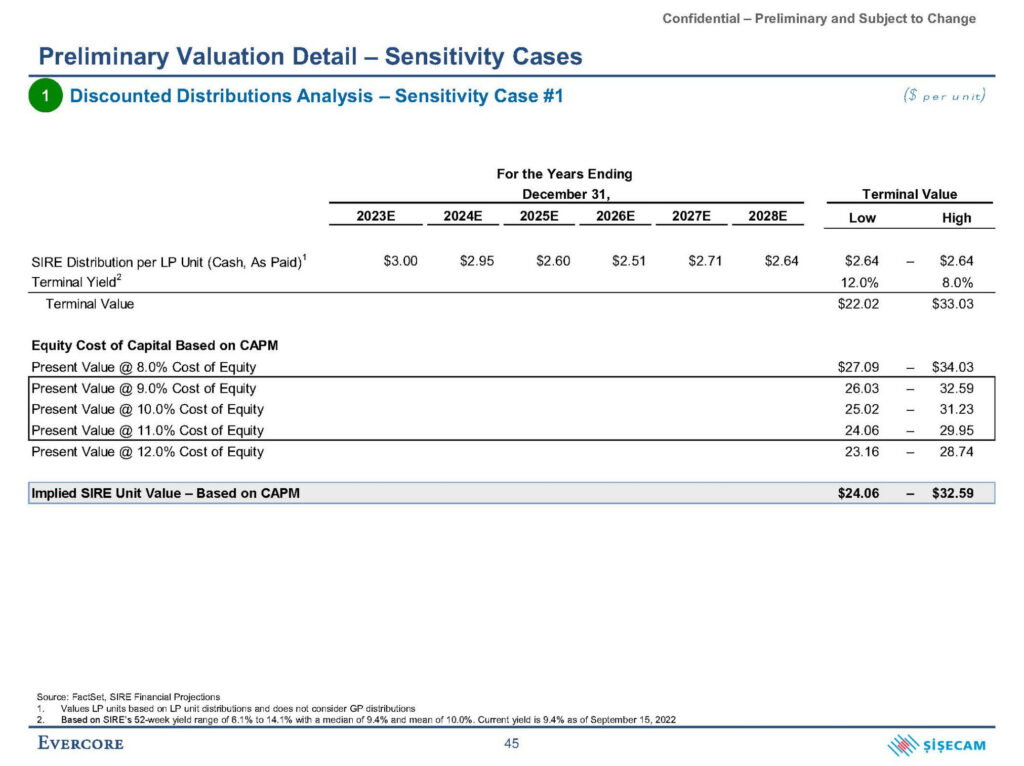
You might see methodologies like the Dividend Discount Model (DDM) or Discounted Distribution Analysis (DDA) if you’re valuing a firm like an MLP with high margins and high dividend yields (see: Midstream oil & gas companies).
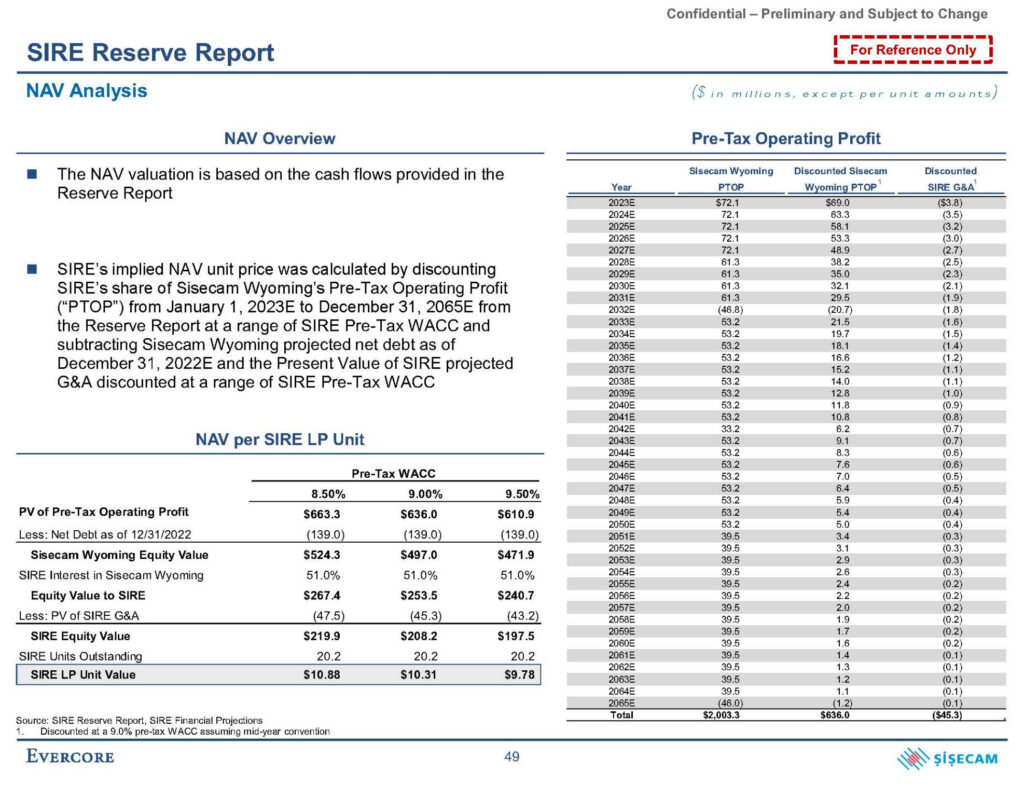
Some “Chemicals” companies also own and operate their own mines, so they can source their inputs internally.
If that happens, you might see the NAV Model commonly used in oil & gas and mining.
Here are a few examples from Evercore’s presentation to Sisecam:
Example Valuations, Pitch Books, Fairness Opinions, and Investor Presentations
Most M&A activity in this sector occurs in specialty chemicals, so most of these presentations and Fairness Opinions are from there.
I’ve included presentations from a few other verticals for variety, but some are older due to the lack of recent deals:
AkzoNobel / Axalta – Acquisition (Lazard, MS, Evercore, JPM, and Incentrum)
XRG / Covestro AG – Acquisition (GS, Macquarie, PWP, Rothschild, and MS)
- “Audit Report” – See Table of Contents for various valuation methods from IVA
- “Transfer Report” (requirement under German law) – See valuation from PwC in Annex 8 starting on pg. 87
Linde / Praxair – Merger of Equals (BofA, GS, Macquarie, MS, PWP, and CS)
- Investor Presentation
- Fairness Opinions – CS | BofA
Paine Schwartz Partners / AgroFresh Solutions – Leveraged Buyout (PWP and Evercore)
- PWP M&A and Valuation Presentation
- Later Presentation (M&A, LBO and Valuation)
- Fairness Opinion (search for “The Special Committee retained Perella Weinberg to act as its financial advisor”)
Sisecam Resources – Take-Private of Subsidiary (Evercore and BofA)
Solenis / Diversey Holdings – Acquisition (Evercore, Centerview, JPM, BofA, Piper Sandler, and GS)
Calumet Specialty Products – MLP to C-Corporation Conversion (Evercore)
- Investor Presentation
- Fairness Opinion (search for “The Conflicts Committee retained Evercore”)
Solstice / Element Solutions – Acquisition (BofA, GS, and PJT)
TLGY Acquisition Corporation / Verde Bioresins – Terminated SPAC / IPO Deal (Roth Capital)
Rio Tinto / Arcadium Lithium – Acquisition (GS, JPM, Gordon Dyal, and UBS)
Reagents and Catalysts: The Top Chemicals Investment Banking Groups and Firms
It’s difficult to determine the “top banks” because the Chemicals team’s placement varies by bank. For example:
- Morgan Stanley – It’s a separate team within Industrials.
- TD – It’s within the Energy, Power & Utilities group.
- Evercore – It’s a separate team.
- Citi – It’s part of the “Natural Resources and Clean Energy Transition” team.
At a high level, the “usual suspect” bulge brackets (GS, JPM, MS, BofA, and Citi) are all strong in Chemicals.
Among the elite boutiques, Evercore is the clear standout, but Lazard, PJT, Perella Weinberg, and Centerview also have strong teams.
At the middle-market and IBAB levels, firms like HSBC, Jefferies, Rothschild, Houlihan Lokey, Stifel/KBW, and Baird all have well-known teams.
But the most notable one is Piper Sandler, which acquired the top Chemicals boutique bank, the Valence Group, in 2020 and has performed well ever since.
Other notable boutiques include Young & Partners, Natrium Capital, Grace Matthews, FMI, and Blaige & Company.
Exit Opportunities
There’s a ton of private equity activity in the sector, so you should not have any trouble winning an offer at an industrials, materials, or energy-focused firm.
Few hedge funds specialize in chemicals, but plenty have a broader materials, life science, or industrials focus.
You could also move into corporate development, corporate finance, and related areas at firms in any vertical above.
Venture capital is the least likely exit opportunity because chemicals is not an especially “hot” area for startups, even though many other startups depend on them.
A few examples of PE firms with previous deal activity in chemicals include Apollo, One Rock, HIG, CD&R, Carlyle, Paine Schwartz (see the AgroFresh deal), Bain Capital, Rhone, PAI, Arsenal, Aurora, and Nautic.
How to Learn More About the Peptides Chemicals Sector
I do not know of any full training courses dedicated to this sector, but here are a few good news and M&A sources:
- Chemical Week by S&P Global
- Chemistry World
- Industry / M&A Updates – Piper Sandler | PwC | DC Advisory | L. Hulett | Grace Matthews
- Deutsche Bank’s “Chemicals for Beginners” Guide – I won’t link to it here for IP/copyright reasons, but you may be able to find an older version online.
We cover a few chemicals-adjacent companies in sectors like metals/mining, energy, and industrials in our courses, but there are no pure-play examples.
Should You Synthesize Your Way into Chemicals IB?
This is a bit of a silly question because Chemicals is usually a sub-group within another team, like Transportation within Industrials.
So, you probably won’t recruit for this specific group, and you’ll only find out about your placement later.
If you do get the chance to join, it could be a great experience because you’ll get lots of exposure to M&A deals, debt issuances, and the occasional leveraged buyout.
The main downside is that it is highly cyclical, like all commodity-based businesses, so you are taking a chance on the deal flow.
And while M&A mega-deals happen, they’re also more sporadic than in sectors like healthcare and technology.
But if you’re interested in chemistry, chemicals, and all the nuances above, it might be time to put on your lab coat and cook your way in.

About the Author
Brian DeChesare is the Founder of Mergers & Inquisitions and Breaking Into Wall Street. In his spare time, he enjoys lifting weights, running, traveling, obsessively watching TV shows, and defeating Sauron.
Free Exclusive Report: 57-page guide with the action plan you need to break into investment banking - how to tell your story, network, craft a winning resume, and dominate your interviews