
 We respect your privacy. Please refer to our full
 2026 Investment Banker Salary and Bonus Report: To the Senior Bankers Go the Spoils
NOTE: This article is an update to last year’s compensation report because the numbers haven’t changed much. I’m leaving the comments from last year’s article in place for this reason as well.
The 2020s have been a bit of a rollercoaster ride for investment banker salaries and bonuses.
In 2021, booming SPAC activity, 0% interest rates, and COVID-inspired deals boosted fees and hiring to absurd levels…
…but then compensation fell back down to earth as interest rates rose and the world normalized in 2022 and 2023.
Then, 2024 and 2025 seemed like a return to form, with M&A deal volume up 20%, 30%, or even 50% in some regions; investment banking fees rose 10 – 30% in each year.
Unfortunately, that didn’t translate into significantly higher compensation for Analysts and Associates; most of the benefits went to senior bankers.
Based on end-of-year 2025 bonuses, total compensation rose ~5% for Analysts and Associates, 10 – 15% for VPs and Directors, and ~25%+ for MDs:
| Position Title | Typical Age Range | Base Salary (USD) | Total Compensation (USD) | Timeframe for Promotion |
|---|---|---|---|---|
| Analyst | 22-27 | $100-$125K | $165-$225K | 2-3 years |
| Associate | 25-35 | $175-$225K | $285-$500K | 3-4 years |
| Vice President (VP) | 28-40 | $250-$300K | $525-$800K | 3-4 years |
| Director / Senior Vice President (SVP) | 32-45 | $300-$350K | $700-$900K | 2-3 years |
| Managing Director (MD) | 35-50 | $400-$600K | $1-$2M+ | N/A |
NOTE: All numbers are pre-tax for New York-based front-office roles and include base salaries and year-end bonuses but not signing/relocation bonuses, stub bonuses, benefits, etc.
These are roughly the 25th to 75th percentile ranges across the “large banks” (i.e., excluding 5-person regional boutiques).
And yes, some elite boutiques paid above these ranges (more on that below):
- What Happened to Deal Activity and Investment Banker Salaries and Bonuses Last Year?
- Specific Trends in Investment Banker Salaries and Bonuses
- Investment Banker Salary and Bonus Levels: The Main Components
- Investment Banker Salary and Bonus Levels: Analysts
- Investment Banker Salary and Bonus Levels: Associates
- Investment Banker Salary and Bonus Levels: Vice Presidents
- Investment Banker Salary and Bonus Levels: Directors
- Investment Banker Salary and Bonus Levels: Managing Directors
- Regional Differences and London Numbers
- What Does This Mean for Future Investment Banker Salary and Bonus Levels?
- For Further Learning
What Happened to Deal Activity and Investment Banker Salaries and Bonuses Last Year?
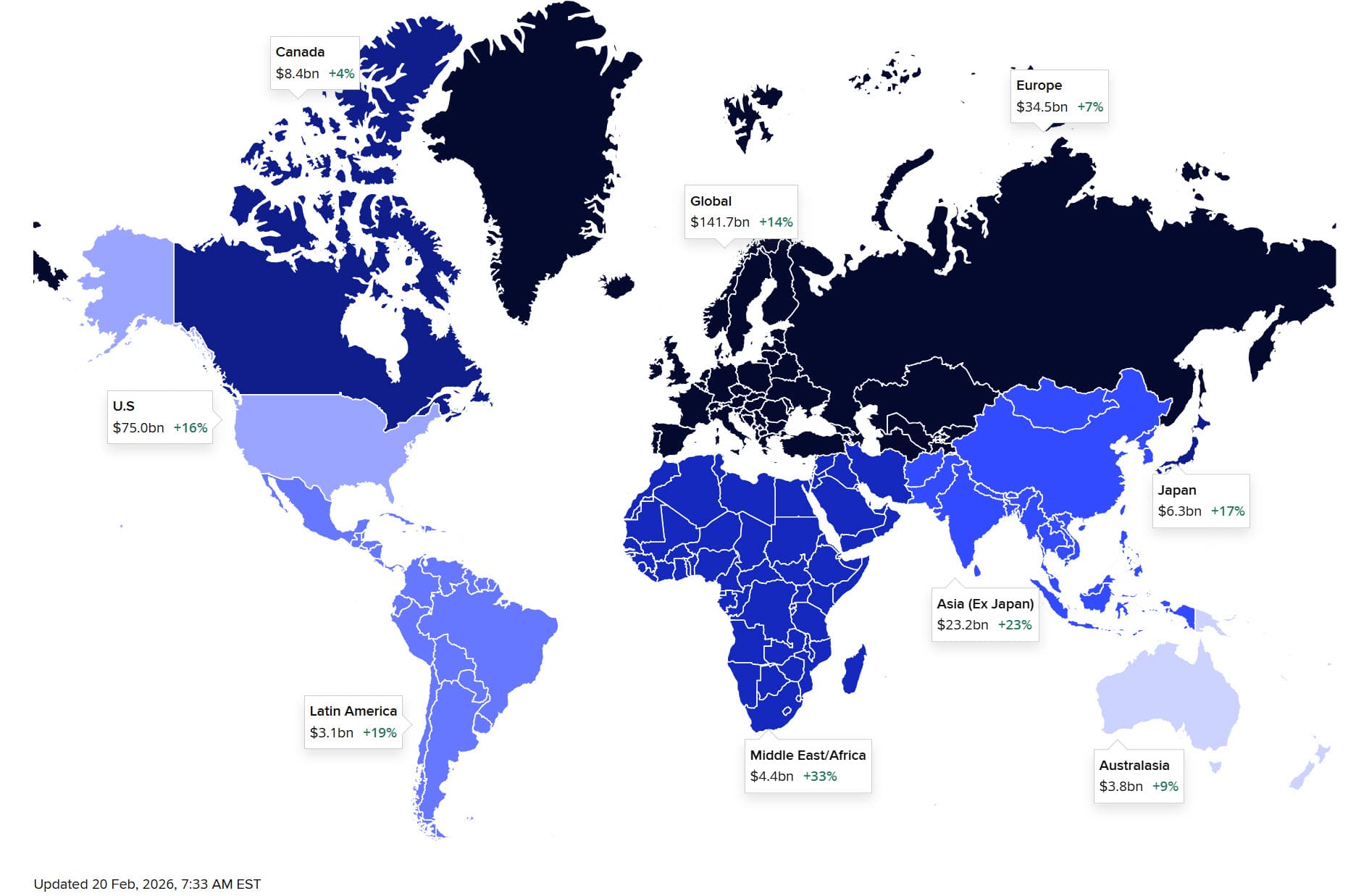
I always start by looking at the total investment banking fees by region and M&A deal volume by region:
Investment Banking Fees by Region and Annual Growth Rates:
M&A Deal Volume by Region and Annual Growth Rates:
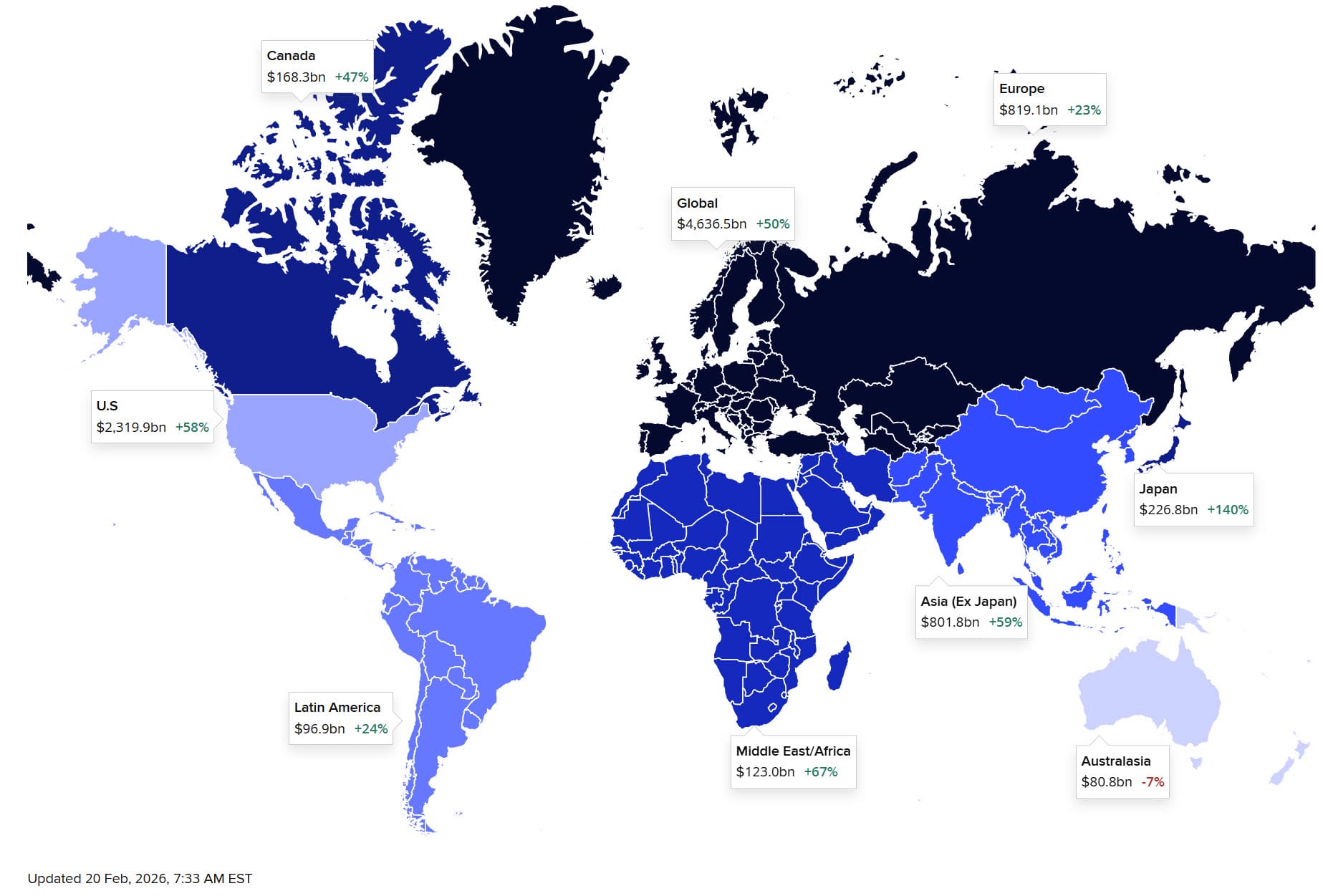
M&A deal volume in dollars was up by almost 50% worldwide (some estimates say it’s more like 35 – 40%), but investment banking fees rose by only 10 – 20% in most regions.
I can’t say exactly why this happened, but it’s likely because:
- Capital markets activity increased by much less than M&A deal volumes in most regions (5 – 10%).
- Much of this M&A activity was for speculative mega-deals that may not close. And if the deal doesn’t close, banks do not get paid (much).
- In some regions, there is fee compression due to competition and more deal work being done internally at companies.
Interestingly, tariffs – which everyone freaked out about in the middle of the year – did not end up mattering that much, though they may have killed a few deals.
The uncertainty around them, the constant policy flip-flops, and the general incompetence around their execution also factored in.
The Fed reduced short-term interest rates slightly, and CPI inflation fell very slightly, but I don’t think these played a big role.
I would argue that the increased deal activity had more to do with lax antitrust enforcement by the Trump administration and continued AI hype than anything else.
But if investment banking fees rose by 10 – 20%, and global M&A deal volumes were up by 40 – 50%, why did average Analyst and Associate compensation rise by only 5%?
The simplest answer is that it’s still an employers’ market, so firms can pay junior bankers almost anything they want.
Banks are willing to pay up for rainmaking MDs who can generate significant fees, but it’s no longer 2021, when banks needed a lot of junior employees to grind through deals.
The increase in M&A deal volume was heavily weighted toward a small number of mega-deals, which tend to be more efficient from a Revenue / Employee perspective.
Also, hiring in peer industries (Big Tech, management consulting, law, etc.) is terrible, so banks do not feel much pressure to increase compensation.
Specific Trends in Investment Banker Salaries and Bonuses
Looking at ~200 data points on salaries and bonuses for this year, a few trends stood out.
First, yes, some of the elite boutiques pay higher bonuses, but this is mostly visible at the Associate and VP levels and above.
For example, Perella Weinberg Partners (PWP) and Centerview (CVP) are well-known for paying Associates $50 – $100K+ more than the ranges quoted above.
Unlike the bulge brackets, they also pay these bonuses in 100% cash.
But at the Analyst level, total compensation was much closer to normal at these firms and other elite boutiques:
- From what I could tell, firms like Lazard, Evercore, and Moelis paid top-ranked Year 1 Analysts nearly the same total compensation as the bulge brackets (e.g., $180 – $195K range). PWP also appeared to be in this range.
- Top-ranked Year 2 Analysts at the EBs earned above the $225K top-end of the Analyst range above, but these were mostly 10 – 15% differences (e.g., $250K total compensation).
Some banks also pay very different amounts depending on your “bucket” (e.g., top-ranked vs. upper vs. middle vs. bottom), but this varies widely by firm and level.
Another notable trend is that bonuses do not necessarily have much to do with the deal flow, reputation, or “ranking” of the bank.
For example, Bank of America is normally viewed as a “mid-tier bulge bracket,” but for some reason, it seems to pay awful bonuses to mid-level bankers while treating Analysts and MDs well.
For example, BofA apparently paid some Year 3 Associates bonuses in the $110 – $150K range, while most other banks paid in the $200K – $300K+ range.
Meanwhile, a few seemingly “random” banks, like Santander, paid quite well for New York-based roles.
—
I’ll comment more on these trends below, but here’s a quick reminder of the main compensation components if you haven’t read these reports before:
Investment Banker Salary and Bonus Levels: The Main Components
For most bankers, there are five main components to “compensation”:
- Base Salary: This is what you earn via paycheck or direct deposit every two weeks. These numbers tend to stay the same for years and then move up periodically at the Analyst and Associate levels. At most banks, these were last adjusted in 2022.
- Stub Bonus: Since Associates graduate from MBA programs and start working in the middle of the calendar year, they receive “stub bonuses” for their first ~6 months on the job. These are similar across banks and might be ~$35 – $50K, depending on the region.
- End-of-Year Bonus: You earn this after your first full year of work. Analyst bonuses are 100% cash, but a percentage shifts to stock and deferred compensation as you move up. For example, Associate and VP bonuses might be 20 – 30% deferred, while MD bonuses could be 30 – 50% deferred.
- Signing/Relocation Bonus: This applies to Analysts and Associates who graduate and accept full-time offers; like the stub bonus, it’s usually a small percentage of your base salary.
- Benefits: Finally, you’ll get health insurance, vacation days, and participation in the firm’s profit-sharing or 401(k) retirement plans. In Europe, this one mostly takes the form of “more vacation days” since healthcare is government-funded via higher taxes.
Investment Banker Salary and Bonus Levels: Analysts
Since most Analysts start working in the middle of the calendar year after graduation, the numbers here are based on mid-2025 payouts.
We estimate the top end of the range at $225K, but some Year 2 Analysts at elite boutiques earned above that, with a few at bulge brackets joining them.
Year 3 Analysts are a rare species these days because most banks now promote Analysts after two years, but compensation at that level seemed to be in the $200 – $270K range.
If we say the midpoint of Analyst total compensation is $195K, it’s a ~5% increase over the midpoint of last year’s range.
That’s not terrible, but it is disappointing given the 10–20% increase in IB revenue.
Investment Banker Salary and Bonus Levels: Associates
I gave a few sample numbers for Associates to illustrate the massive spread, with bankers at firms like PWP and CVP potentially earning $100K+ more than those at the bulge brackets.
Bonuses at this level are normally 60 – 70% of base salaries for Year 1 Associates, but this rises to ~100% (or more!) at many firms by Year 3.
The elite boutiques pay even more than this, and some even pay 100% cash bonuses.
For firms that do not pay 100% cash bonuses to Year 2 and 3 Associates, the split tends to be 70 – 80% cash, with the rest deferred or paid in stock.
You should expect more variable bonuses as you move up, starting at the Associate level.
Investment Banker Salary and Bonus Levels: Vice Presidents
I found a decent amount of VP-level compensation data this year, so I am more confident of the ranges here.
At this level, bonuses tend to be ~100% of base salaries initially, rising to 200% or 250% of base salaries for Year 3 VPs.
Again, the EB banks will pay at the top end or even above it, while firms like BofA seem to pay well below this (maybe with exceptions for top performers).
Investment Banker Salary and Bonus Levels: Directors
It’s almost impossible to find accurate data on bankers at this level, but I found a few examples pointing to a ~15% increase, which explains my $700K – $900K range above.
But I would not be surprised if some Directors at elite boutiques earned above that, perhaps into the $1M range.
Investment Banker Salary and Bonus Levels: Managing Directors
Managing Director compensation tends to correlate most closely with investment banking fees and deal activity.
Their bonuses are literally percentages of the fees they generate, so the sky’s the limit in a great year, while $0 bonuses are possible in a terrible year.
The $1M – $2M compensation range above is for “Junior MDs” who are still getting up to speed on execution and clients.
More experienced MDs could earn above that, and Group Heads who do well could earn even more, perhaps into the $5M+ range.
That said, the “average MD” does not earn in that range; sources like the WSJ have studied this and found median annual compensation in the $1 – 2 million range over multiple decades.
(And yes, that means that inflation-adjusted pay hasn’t increased much.)
Expect 30 – 50% of bonuses to be deferred or paid in stock at this level.
Regional Differences and London Numbers
Unfortunately, no one seems to publish solid compensation reports for London anymore.
But from what I can gather, you should expect a 15 – 30% discount to NY compensation numbers there.
If base salaries progress from £70K to £90K, a reasonable total compensation range for Analysts might be £100K to £150K, or roughly $135K to $200K USD (assuming a 1.35x GBP/USD).
It seems like Associate base salaries go from £115K to £135K as you advance, with bonuses at 80 – 100% of base salaries.
This would equate to a total compensation range of around $280K to $365K USD at the same 1.35x FX rate.
I do not have numbers for Asia, Australia, or other regions, but feel free to chime in if you do or know of good sources for them.
What Does This Mean for Future Investment Banker Salary and Bonus Levels?
In the 2025 report, I predicted that bonuses would change by +10% to –10%, which is close to what happened.
I’ll be more specific this year and predict that bonuses will be flat at most levels.
Why?
First, I think at least a few of the mega-deals signed in 2025 will fall apart due to regulatory, antitrust, or geopolitical factors.
IPO activity for 2026 will be stronger, driven by companies like SpaceX and OpenAI, but that won’t be enough to offset lower M&A advisory fees.
Also, there’s a moderate chance the AI bubble will start to deflate as more investors ask questions about massively higher CapEx spending by Big Tech.
Lower stock prices and more “questions asked” tend to make companies more cautious and less likely to execute large deals.
In last year’s report, I also mentioned that it was tough to make a strong case for the bulge bracket banks over the elite boutiques, at least based on long-term compensation and promotion opportunities.
That is still true, but I’ll be even more specific: Bank-specific differences within each category matter a lot more now.
Specific EBs, such as PWP and CVP, now seem to pay significantly more than the others.
Meanwhile, some of the “weaker/borderline” bulge brackets, such as UBS, appear to pay mid-level bankers more than “stronger” ones, such as BofA.
The decision-making process becomes a giant branching tree when you account for all these factors.
And the more twists and turns bonuses take on their rollercoaster ride, the more branches get added to that tree.
For Further Learning
Finally, if you’re not deterred by these lower bonuses and you’re still committed to breaking into IB as an Analyst or Associate, our friends at Wall Street Mastermind might be able to help you out.
They’ve worked with over 1,000 students to help them secure high-paying investment banking jobs out of school (and internships while in school), and their coaches include a former Global Head of Recruiting at three different large banks.
They provide personalized, hands-on guidance through the entire networking and interview process – and they have a great track record of results for their clients.

About the Author
Brian DeChesare is the Founder of Mergers & Inquisitions and Breaking Into Wall Street. In his spare time, he enjoys lifting weights, running, traveling, obsessively watching TV shows, and defeating Sauron.
Free Exclusive Report: 57-page guide with the action plan you need to break into investment banking - how to tell your story, network, craft a winning resume, and dominate your interviews
Comments
Read below or Add a comment
Hi Brian, I am a 1st year law student in the UK with insight schemes (like spring weeks) at a magic circle law firm and a global law firm. I’m going into 2nd year after the summer and, thanks to your articles, I am aware that internship application season is approaching fast. What do you think my chances are for applying to Investment Banking Analyst positions as a law student? I have decent grades (uk 2:1) and attend a Russell Group uni (semi-target). Happy to provide more details if needed.
Thanks so much!
P.S Thank you for all the work you and your team do. This website has helped me immensely – it changed my life (as cringe as that sounds, but true).
Summer internship recruiting in the UK is not that fast. It still tends to start about a year before the internship, so the start date should be in the summer next year for 3rd year internships for you (well, unless they suddenly move up the start date between now and then). It’s really just the U.S. that has these extremely early internship recruiting start dates in the early-to-middle part of students’ second years in university (though other places have been moving up as well).
Being a law student matters less than your university, grades, and internship experience. Being from a semi-target with a 2:1 and spring weeks but no internships means you have an “OK” chance but not a very high one. To improve your chances between now and then, do anything you can to get more of a finance internship, even if it’s off-cycle, informal, at a small/non-name boutique, etc., and make sure you learn the technical side and network (these are arguably less important in London but still matter for summer internship recruiting).
Is it possible for someone to enter Ib from engineering in early 30s and reach a net worth of 4-5 mil by 50?in Eu/uk
It’s possible, but your chances are lower than in the U.S. because compensation is lower and taxes are higher in most EU countries (and the U.K.), and the cost of living isn’t lower enough to compensate. There’s a reason why highly paid bankers are mostly in the U.S. or in low/no-tax places like Dubai and Singapore.
For managing directors, especially lower middle market M&A, how does the compensation work with respect to base and percent of deal fees as bonus?
For example, let’s say an MD receives a base of $200k/year and 30% of deal fees. Do firms typically set a minimum threshold at which the 30% of fees applies, or is it it applied to total fees?
Example Assumptions: $200,000 base; Deal fees of $800,000; bonus — 30% of fees
Do most lower middle market banks use a minimum fee threshold before applying the 30% of fees bonus? If so, what is a typcial fee threshold or hurdle?
The effective all-in compensation as a percent of deal fees will vary drastically depending on whether a threshold is used.
A:
If no threshold, 30% x $800,000 = $240,000 bonus. All in comp: $200,000 base + $240,000 bonus = all-in compensation of $440,000, or 55% of total deal fees in this example.
B:
Threshold of $500,000. So, 30% would only apply to deal fees more than $500,000, which would be $300,000 x 30% = a bonus of $90,000. All-in compensation would be $290,000, or 36% of total deal fees.
Which approach is typically used when compensation states some base figure and, say, 30% of fees (I’ve seen other articles use 45% to 50%+ of deall fees for bonus — and I’d have to assume the firms would have a threshold/hurdle to meet if the Managing Director also receives a base salary).
Sorry, but we don’t have compensation plan information to this level of detail, so I can’t say anything detailed here. My guess is that all of this is highly variable by firm and group, and there is no industry standard and no way to tell what the most common arrangements even are, given the few banking professionals at this level. 50% of deal fees sounds way too high at most firms – maybe if it’s a small boutique with just one person in charge or just a few key partners, but I can’t see anything in that range even at a middle market bank.
Honestly would be interesting to see the churn rate of finance. Curious to hear what the average tenure of an MD is also. Quick ChatGpt query revealed 2-4 years, so it’s literally like NBA/NFL stats. MDs are the 1%, of which those that last past the 2-4 churn are the 1% of the 1%. Absolutely insane. I’m in tech now, arguably it’s easier and more lucrative to be an entrepreneur or high level developer than it is to be an MD at an EB/MF/BB.
Side note, would like to hear what you would say the “terminal’ level is in finance. From my understanding, it would be VP at most banks. Good enough to execute deals, but not good/salesly enough or political enough to move up to Director/MD.
The turnover rate of MDs is quite high, but you have to keep in mind that even if an MD is “forced out,” they don’t necessarily leave the industry. Some just move to smaller firms, leave for normal companies in corporate roles, etc. So it’s not really true that they have high earnings for a few years and then “retire” like an NFL player does. Their earnings may decrease if they leave for another industry, but not to the extent that an athlete’s earnings will drop.
I don’t really think it’s “easier” to be an entrepreneur or high-level developer than an MD. Yes, some idiotic influencers say that, but survivorship bias is very high, and most people do not really achieve much before giving up or getting forced back into a normal job.
You can usually advance to the VP level through sheer effort and modest competence, but going above that requires sales/political skills.
Hi Brian,
I want to have 25 – 50 million dollars net worth. Ideally by 40 (45-50 even up until 55 is also fine), I’m 20.
What path should I take? (Banking, starting a business, buying a business/businesses by raising combination of equity and debt somehow).
I’m honestly so confused and feel lost.
Almost no one in any of these industries reaches that net worth by 40 or even 50, so you may want to aim for more realistic goals first. If you have not even had a real job yet, you should probably get internship experience in different industries and assess what you want to do and what you’re good at before setting a goal to be among the richest 0.1% of the population by an arbitrary date. Cart before the horse.
Hi Brian! I’m currently a freshman from santa clara univesity (non-target). I am also a division 1 student athlete at my college. I’m looking for ways to break into IB. I’m planning on majoring in finance and considering to minor or double major in either Econ or math. Do you have any advice on picking either Econ or math as a minor/double major? Also, I understand that I’m from a non-target school and am considering to transfer to a target school. Do you recommend me to transfer? If I stay at my current school and continue playing as a D1 athlete, what are my chances to break into IB even if I do a lot of networkings? For the rest of my freshman year, what are some things that I can do to better prepare myself for recruiting? Thank you!
Please see:
https://mergersandinquisitions.com/investment-banking-major/
https://mergersandinquisitions.com/investment-banking-target-schools/
Yes, transfer ASAP. Being a student athlete does almost nothing to get you into the industry vs. attending a top university.
Hi Brian I am from India and had a drop year in my engineering due to some harsh personal reasons and I am interested in IB and i will be going to attend my MBA in UK and I am also thinking to clear cfa level 1 before going for an MBA I still have 1 year of college left can you please guide me with the path . Am i going right path or not if not what should i change about it .
I would recommend looking at the articles on this site that cover recruiting in the UK, the CFA, and MBA-level recruiting (you can do a quick search to find them). Attending a top MBA in the UK without at least some full-time work experience is generally not a good idea because at the MBA level, banks want to hire Associates who have industry experience. Occasionally, people sometimes still win offers out of MBA programs without FT experience but it’s very rare and mostly confined to emerging/frontier markets. So… you should probably think about ways to get full-time work experience post-graduation before doing an MBA. And the CFA will not help in this case because it doesn’t count as full-time work experience.